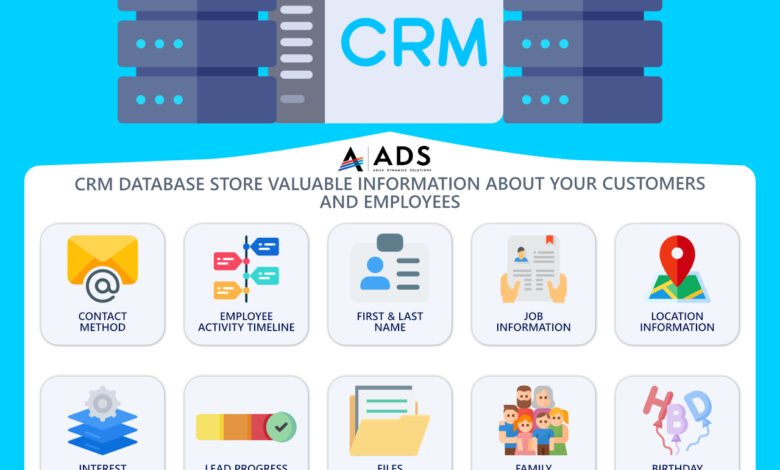
CRM database examples are essential for understanding how modern businesses organise and use customer information effectively. A CRM database is a structured system that stores customer details, communication history, purchase records, and sales interactions in one central location. This helps organisations streamline operations and improve customer relationships through accurate and accessible data.


In today’s digital economy, crm database examples are widely used across industries to demonstrate how customer data flows within a business. From small startups to large enterprises, companies rely on CRM systems to unify information from emails, social media, phone calls, and live chats. This unified approach improves efficiency and allows teams to make better strategic decisions based on real insights.
What Is a CRM Database and Why It Matters
A CRM database is a system designed to store and manage all customer-related information in a structured format. It includes contact details, interaction history, sales activities, and support tickets. This centralisation allows businesses to track customer journeys and improve engagement across every stage of the sales process.
Understanding crm database examples helps businesses see how powerful structured data can be in improving performance. Instead of scattered spreadsheets or disconnected tools, a CRM database ensures all departments work with the same information. This improves communication, reduces errors, and helps companies deliver more personalised customer experiences.
CRM Database Examples in Real Life
CRM database examples in real life can be seen in industries such as retail, banking, healthcare, and technology. For instance, an eCommerce company uses a CRM database to track customer purchases, abandoned carts, and browsing behaviour. This information is then used to create targeted marketing campaigns and improve sales conversion rates.
In service-based industries, crm database examples show how customer support teams manage queries efficiently. When a customer contacts a company, their entire history is instantly available, allowing faster resolutions. This improves satisfaction levels and builds stronger long-term relationships between businesses and customers.
CRM Database Structures and Core Tables
A CRM database is built using structured tables that store different types of information. Common tables include Customers, Leads, Interactions, and Sales Opportunities. Each table plays a specific role in managing customer data efficiently and ensuring that all records are properly organised.
Looking at crm database examples, it becomes clear that relational structures are essential for performance. These tables are connected using unique identifiers, allowing businesses to track every customer interaction from first contact to final purchase. This structure helps organisations maintain accurate and consistent data across all departments.
SQL CRM Database Examples and How They Work
SQL CRM database examples show how structured query language is used to manage and retrieve customer data. SQL databases allow businesses to perform complex operations such as filtering leads, analysing sales performance, and generating detailed reports. This makes SQL a powerful tool for CRM systems.
In many crm database examples, SQL databases like MySQL and PostgreSQL are commonly used because they handle structured relationships efficiently. Businesses can use simple queries to retrieve important insights, such as identifying high-value customers or tracking recent purchases. This improves decision-making and enhances overall business intelligence.
Types of CRM Database Systems
There are several types of CRM database systems, each designed to meet different business needs. Relational databases are the most widely used, offering structured data storage and strong relationships between tables. NoSQL databases, on the other hand, provide flexibility for handling unstructured or large-scale data.
When studying crm database examples, cloud-based CRM systems are becoming increasingly popular. These systems allow businesses to access customer data from anywhere, improving collaboration and remote working capabilities. Cloud CRM solutions also offer scalability, making them ideal for growing organisations.
Popular CRM Software and Database Integration
Many well-known CRM platforms rely on powerful databases to function effectively. Software such as Salesforce, HubSpot, and Zoho CRM are widely used examples that demonstrate how CRM databases operate in real-world environments. These platforms manage millions of customer records while maintaining performance and reliability.
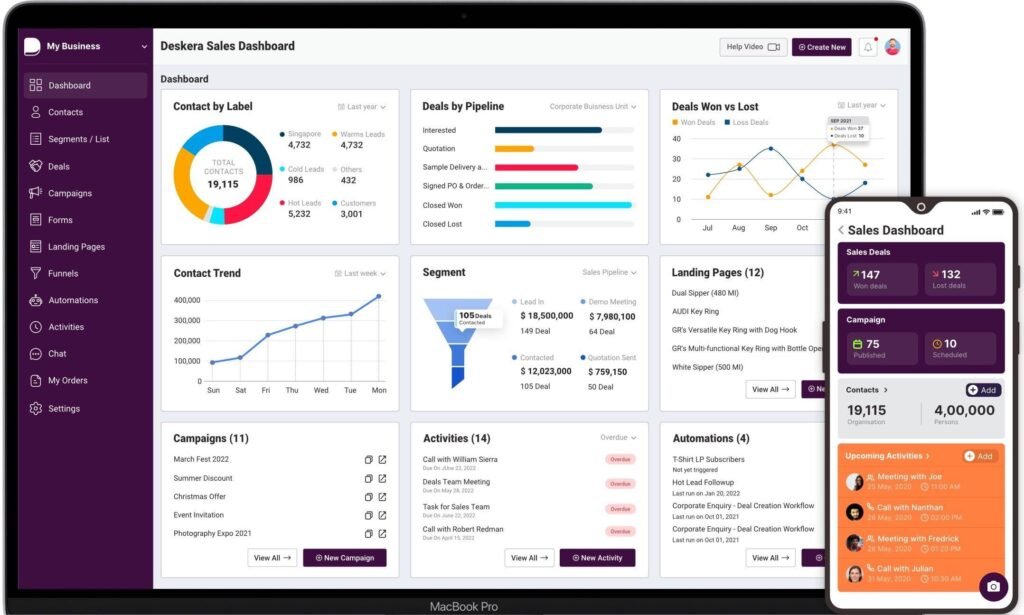
In crm database examples, these tools highlight how businesses use dashboards, automation, and analytics to improve customer engagement. Each system is built on a structured database that supports sales tracking, marketing automation, and customer service management. This integration helps businesses operate more efficiently and strategically.
SQL CRM Database Schema Examples Explained
SQL CRM database examples often include schema designs that define how tables interact with each other. A typical schema includes relationships between customers, orders, and interactions. These relationships ensure that data is stored logically and can be retrieved efficiently when needed.
By examining crm database examples, it becomes clear that schema design is critical for performance. A well-designed CRM schema reduces redundancy and improves query speed. It also ensures that businesses can scale their systems without compromising data integrity or accuracy.
Benefits of Using CRM Database Systems
CRM database systems offer numerous benefits for businesses of all sizes. They help improve customer relationships, enhance marketing strategies, and increase sales efficiency. By centralising data, organisations can make informed decisions based on real-time insights rather than assumptions.
In practical crm database examples, businesses experience improved communication between departments. Sales, marketing, and customer support teams all access the same data, ensuring consistency across operations. This leads to better customer satisfaction and stronger brand loyalty over time.
Best Practices for Building CRM Databases
Building an effective CRM database requires careful planning and structured design. Businesses must ensure data accuracy, avoid duplication, and maintain proper relationships between tables. Regular maintenance is also essential to keep the system efficient and reliable.
In many crm database examples, successful systems follow strict validation rules and data governance policies. This ensures that customer information remains consistent and secure. Businesses also integrate automation tools to reduce manual data entry and improve overall efficiency.
Future Trends in CRM Database Technology
The future of CRM databases is being shaped by artificial intelligence, automation, and cloud technology. AI-powered systems are now capable of predicting customer behaviour and automating routine tasks. This allows businesses to focus more on strategy and customer engagement.
Emerging crm database examples show that real-time data processing is becoming a key trend. Companies are moving towards systems that update instantly across platforms, ensuring accurate and up-to-date information. This evolution is making CRM systems more intelligent and responsive than ever before.
Conclusion
CRM databases are a vital part of modern business operations, enabling companies to manage customer relationships effectively. Through crm database examples, it becomes clear how structured systems improve efficiency, accuracy, and decision-making across industries.
As technology continues to advance, CRM systems will become even more powerful and automated. Businesses that invest in well-designed CRM databases today will be better positioned to meet future challenges and deliver exceptional customer experiences.